

Bewdley Museum & Art Gallery
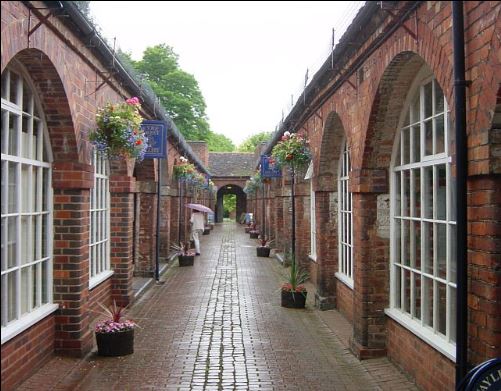
The Bewdley Museum was officially opened in 1972, established by Stephen Quayle to create a "living museum" that would preserve and showcase the town's rich industrial heritage and local crafts. The museum is uniquely housed within several historic buildings. In 1885, the initial idea for a museum in Bewdley was first proposed by the celebrated Victorian writer and art critic John Ruskin. Nothing happened until 1969 when the Bewdley Museum Trust was officially formed to bring this concept to life. Two years passed until restoration work began on the site of the historic butcher's "shambles", a dilapidated 18th-century slaughterhouse that the Bewdley Borough Council was using for storage. In July 1972, the Museum opened to the public with Earl Baldwin of Bewdley performing the ceremony.
Over the years, the museum expanded to incorporate more historic structures and exhibits, including a 250-year-old brass foundry, originally established by Christopher Bancks in the late 17th century. It was acquired and restored with the help of a donation from the Guild of St. George, a charitable trust founded by John Ruskin. The town jails built in 1802 also form part of the Museum, as do air raid shelters from World War II.
The museum's art collection has a distinct history tied to a neighbouring institution. The collection largely originated from the Kidderminster Museum and Art Gallery, which was founded in 1929 and which closed in 1990, with its art collection being transferred to Bewdley. The art collection features paintings of local landscapes and people, and includes significant works by artists such as Cyril Lavenstein, Lord Frederic Leighton, and 50 etchings donated by Sir Frank Brangwyn.
Image(s) below (click to enlarge):
Number of Artists referenced:
11