
Mansfield Museum & Art Gallery
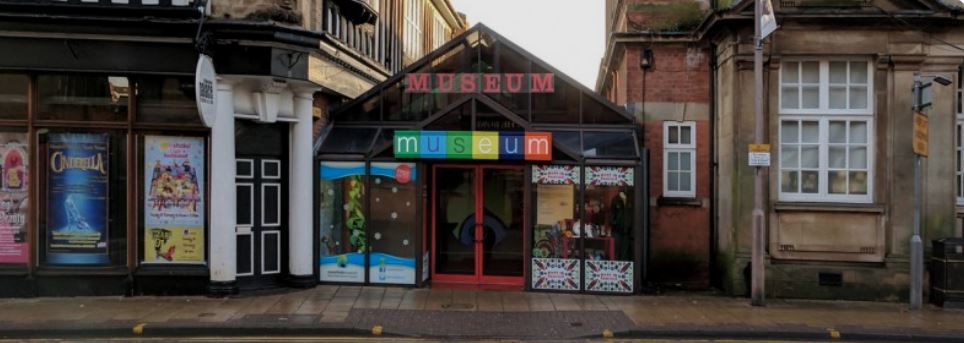
The Mansfield Museum and Art Gallery is located in Mansfield, Nottinghamshire and has served as a cultural hub for over a century. Its history is marked by private philanthropy, community growth, and major architectural expansions. The idea was first mooted in 1903 by local wealthy collector and natural historian William Edward Baily (1845-1903). Shortly before he died, Baily offered his personal collection and a building to house it to the town. The building, a large corrugated iron hut known as the 'Tin Tabernacle', was formerly used as a church in London, and it opened as the first town's museum in 1904. Early donations from local figures, such as naturalist Joseph Whitaker (1850-1932) and artist Albert Sorby Buxton, significantly expanded the museum's holdings. The deteriorating 'Tin Tabernacle' was replaced by the current permanent building, which opened in 1938. A fourth gallery was added in the mid-1960s to accommodate growing exhibits. In 1989, the 'Arcade' extension was officially opened by the Sarah Duchess of York, increasing its public visibility. In 1998, a second story was added to provide modern storage facilities and an education room.
The gallery is particularly noted for its local art holdings, including the aforementioned watercolours by Albert Sorby Buxton documenting Mansfield at the turn of the century, works by notable artists such as Peter Coker, Allan Gwynne-Jones, Alfred William Rich, Gerard Henry Tilson Chowne and Edward McKnight Kauffer.
Image(s) below (click to enlarge):
Number of Artists referenced:
10